The Crown Changes Hands: How BYD Dethroned Tesla to Reshape the Global EV Market
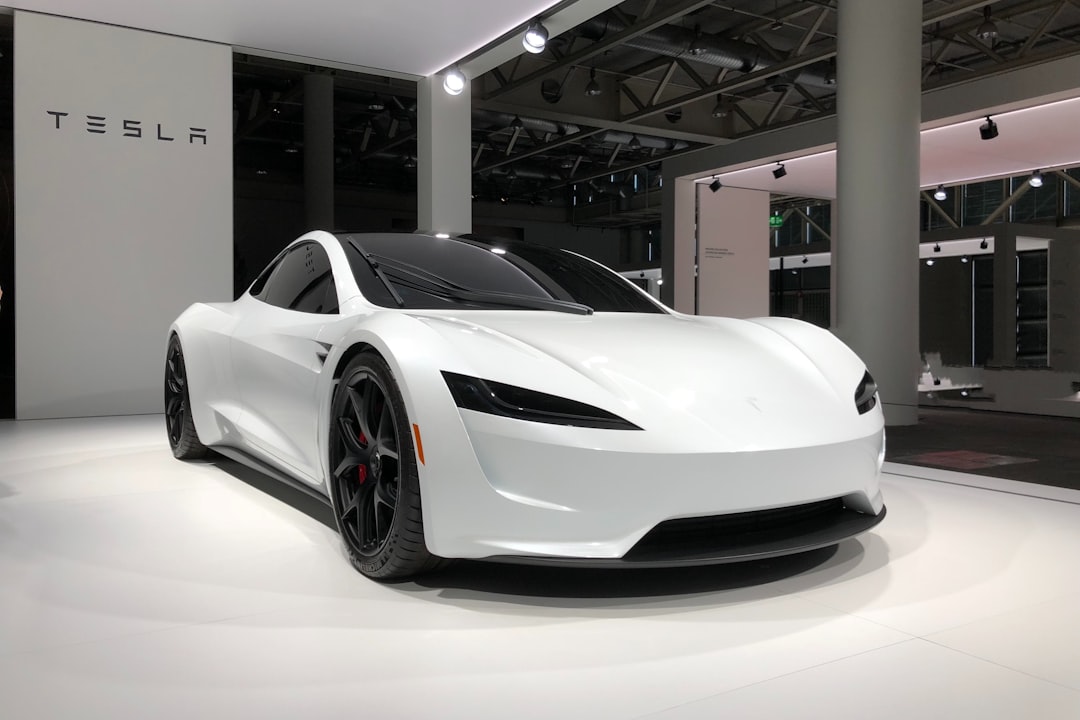
What happens when an American tech darling meets a Chinese manufacturing juggernaut in the arena that will define the next century of transportation?
The answer is playing out in real time as BYD, the Shenzhen-based electric vehicle giant, has officially overtaken Tesla as the world's largest EV seller in 2025. With 2.26 million battery-electric vehicles delivered compared to Tesla's 1.64 million, BYD's victory represents more than just a numbers game—it signals a fundamental shift in how global automotive power is distributed.
The Numbers Tell a Story of Two Diverging Paths
Tesla's quarterly deliveries in Q4 2025 dropped 15-16% from the previous year to around 418,000 units, marking the company's first consecutive annual decline in deliveries. Meanwhile, BYD's fourth-quarter BEV deliveries continued their relentless climb, helped push full-year sales past Tesla's for the first time.
But the financial picture reveals an even starker contrast. Tesla's revenue fell 2.93% to $94.8 billion in 2025, while profit margins compressed dramatically. The company's net profit margin plummeted from over 14% in early 2024 to just 4% by year's end. Operating margins fared even worse, sliding from 15.33% to 4.59%.
BYD, on the other hand, posted revenue of 566.27 billion yuan (approximately $79.5 billion) in the first three quarters of 2025 alone—a 13% year-over-year increase that set new records. The Chinese company's gross margins actually improved by 1.6 percentage points during this period, even as it invested a staggering 43.75 billion yuan in R&D—more than its net profit for the same period.
Tesla's Triple Challenge
Tesla's struggles aren't happening in isolation. The company faces a perfect storm of challenges that would test any organization. Political backlash against CEO Elon Musk's controversial positions has created consumer resistance in key markets, with early 2025 data showing softening sales in both the U.S. and Europe.
"CEO Elon Musk has scored somewhat of an own goal against Tesla," noted Counterpoint Research Associate Director Liz Lee. "We are about to catch a glimpse of how much the company's sales were hurt."
Geopolitical tensions compound these problems. Escalating U.S.-China trade disputes and increased tariffs on Chinese EV components are disrupting Tesla's carefully orchestrated supply chains. In Europe, Tesla's market share hit an eight-year low of 38% in August 2025, down from around 80% in 2020.
The third challenge? An aging product portfolio. While competitors roll out new models every few months, Tesla has been slower to refresh its lineup, leaving gaps that hungry rivals are eager to fill.
BYD's Global Chess Game
BYD isn't just winning at home—it's executing one of the most aggressive international expansion strategies the auto industry has ever seen. The company aims for 50% of its sales to come from outside China by 2030, backed by a network of manufacturing facilities spanning continents.
The scale of this buildout is breathtaking. BYD operates production facilities in Hungary, Turkey, Thailand, Brazil, and plans additional plants across Southeast Asia. The Brazilian facility in Camaçari alone represents a $1 billion investment, with capacity to produce 150,000 vehicles initially, expanding to 300,000 units—and potentially 600,000 under new expansion plans.
Europe: The New Battlefield
In April 2025, BYD achieved a historic milestone: it outsold Tesla in Europe for the first time. The Chinese automaker delivered more vehicles than Tesla in Spain, France, Italy, Ireland, Portugal, and Austria during August 2025, representing six major European automotive markets.
S&P Global Mobility projects BYD will more than double its European sales from 83,000 units in 2024 to 186,000 units in 2025, reaching nearly 400,000 units by 2029. This trajectory would establish BYD as a top-five European EV brand within four years, challenging legacy manufacturers like Volkswagen, BMW, and Mercedes-Benz on their home turf.
The Americas: Avoiding the Tariff Trap
Locked out of the U.S. market by 100% tariffs, BYD is focusing on Central and South America with surgical precision. The company's Brazilian operations go beyond simple assembly—engineers there are developing biofuel-compatible versions of BYD's hybrid systems, tailored specifically for Brazil's ethanol-rich energy matrix.
This isn't just about avoiding tariffs; it's about creating genuine local value. BYD's Brazil plant employs over 1,500 people and is the largest electric vehicle production facility in Latin America. The facility produces the SONG PRO, including a special COP30 edition designed for Brazil's upcoming UN climate summit.
The Innovation Arms Race
Behind the sales numbers lies a fierce technology battle. BYD has unveiled 1,000-kW ultra-fast charging technology and 10C charging rate batteries that set new industry benchmarks, reportedly outperforming Tesla's Supercharger network.
The company's vertical integration strategy—controlling everything from batteries and motors to electronic systems through subsidiaries—provides significant cost advantages and operational efficiencies that Tesla is struggling to match. While Tesla pioneered the direct-sales model and software-defined vehicle approach, BYD has mastered the art of manufacturing at scale while maintaining quality.
Tesla's response has been to double down on autonomous driving and robotics, launching its first Robotaxi service in Austin in June 2025. But with operating margins under pressure and R&D expenses climbing, the company faces difficult choices about where to invest its resources.
What This Means for Consumers
The BYD-Tesla rivalry is reshaping options for car buyers worldwide. BYD's expansion brings more affordable EV choices to markets previously dominated by expensive imports. In some cases, BYD's premium models abroad are priced comparably to Mercedes-Benz and BMW, boosting international profitability while still undercutting established luxury brands.
This competition is accelerating innovation cycles across the industry. Battery costs have fallen to $115 per kWh in 2024 and could drop to $80-99 per kWh by 2026—a 50% decline that would enable price parity with gasoline vehicles.
Industry forecasts project global EV sales could reach 40-50% of total car sales by 2030, up from approximately 20 million units in 2025. With companies like BYD proving that profitable EV production at massive scale is possible, the transition away from internal combustion engines appears to be accelerating rather than stalling.
The Bigger Picture
BYD's rise represents more than corporate success—it embodies China's transformation from manufacturing hub to innovation leader. The company's R&D spending consistently exceeds its profits, with cumulative investment surpassing 220 billion yuan since its founding.
For Tesla, 2025 marked a watershed moment. The company that once seemed unstoppable now faces questions about whether its first-mover advantage in EVs can withstand the onslaught of well-funded, technologically sophisticated competitors emerging from China.
The shift in EV leadership from Palo Alto to Shenzhen isn't just changing where cars are made—it's redefining the future of mobility itself. As BYD plants its flag in Brazil, Hungary, and beyond, the global automotive field is being redrawn with new players, new technologies, and new rules.
The race for EV dominance has entered a new phase, and Tesla is no longer the only company writing the playbook.
Comments