The Dragon That Ate the Lightning: How BYD Dethroned Tesla in the EV Wars
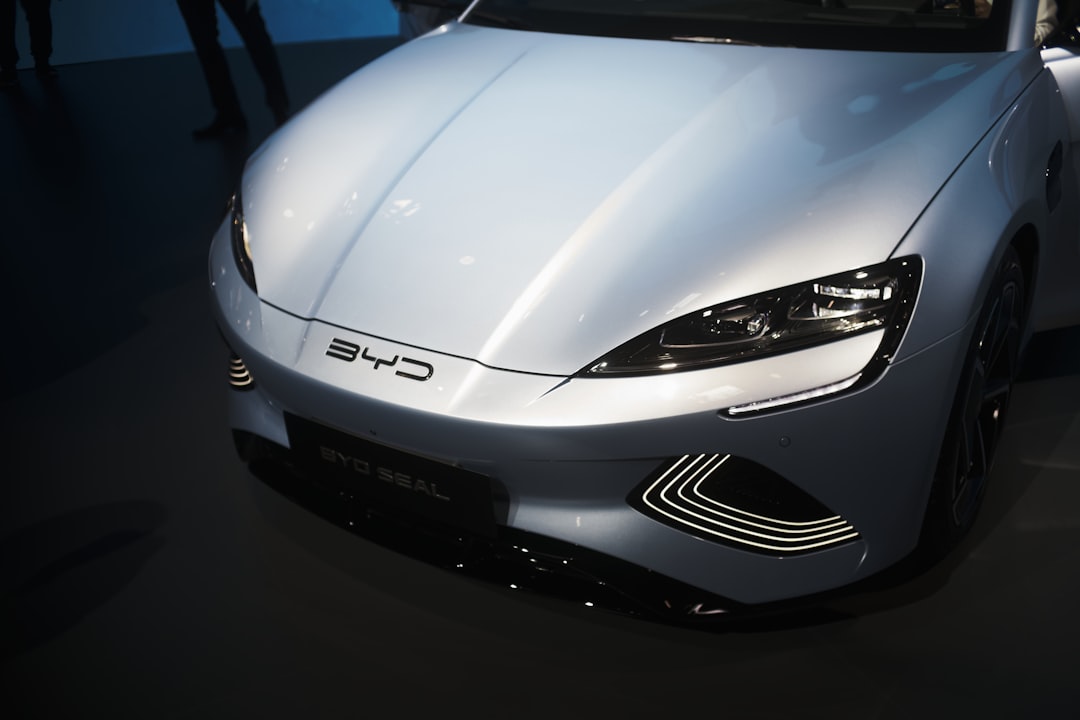
Who would have thought watching two companies swap positions could feel like witnessing a political revolution? But that's exactly what happened when Chinese automaker BYD overtook Tesla in global electric vehicle deliveries—and the numbers are staggering enough to make even the most casual observer take notice.
When Wang Chuanfu founded BYD in 1995 with a focus on batteries, he probably didn't imagine his company would one day challenge Elon Musk's Tesla empire. Yet here we are in 2025, watching the company whose name means "Build Your Dreams" deliver 4.6 million new energy vehicles compared to Tesla's 1.79 million pure electric vehicles. It's a David-versus-Goliath story, except David has been quietly building the world's largest EV manufacturing operation while Goliath got distracted.
The Numbers That Tell the Real Story
Look at the sales figures from 2024, and you'll see a company hitting its stride. BYD delivered 4.27 million vehicles, a 41% jump from the previous year. Tesla? For the first time in over a decade, their deliveries actually declined by 1.1%. In pure battery electric vehicles, the gap was razor-thin: BYD sold 1.76 million compared to Tesla's 1.79 million. But when you factor in BYD's plug-in hybrids—2.5 million vehicles representing 73% growth—the Chinese manufacturer's dominance becomes clear.
The revenue story is equally compelling. BYD reported 777 billion yuan (approximately $107 billion) for 2024, surpassing Tesla's $97.7 billion. But here's what's really remarkable: BYD achieved this while maintaining a market capitalization of just $157 billion compared to Tesla's $800 billion. The market may still believe in Tesla's long-term potential, but the sales reality tells a different story.
In China alone, BYD commands a 32% share of the new energy vehicle market. Tesla? Just 6.1%, despite reaching record shipments in the country. That's not a rounding error—that's a fundamental shift in consumer preference in the world's largest auto market.
Technology Wars: Blade Batteries vs. 4680 Cells
The real battle isn't just about sales numbers—it's about fundamentally different approaches to electric vehicle technology. Recent research from RWTH Aachen University revealed telling differences between BYD's Blade battery and Tesla's 4680 cylindrical cells.
BYD's lithium iron phosphate (LFP) Blade batteries generate roughly half the heat of Tesla's cells during charging, according to the German study. This thermal efficiency translates to real-world advantages: faster charging with less sophisticated cooling systems, better safety margins, and potentially longer battery life. The trade-off? Tesla's NMC chemistry delivers significantly higher energy density—241 Wh/kg versus BYD's 160 Wh/kg.
But BYD isn't standing still. The company recently unveiled charging technology that can add 400 kilometers of range in just five minutes—twice as fast as Tesla's Superchargers. The secret lies in what BYD calls an "all liquid-cooled megawatt flash charging terminal system" paired with 1500-volt silicon carbide power chips. It's the kind of engineering breakthrough that makes Tesla's charging network advantage look suddenly vulnerable.
The Musk Factor
Here's where the story gets particularly fascinating—and uncomfortable for Tesla shareholders. A Yale University study published in 2025 quantified something many had suspected: Elon Musk's political activities have cost Tesla dearly.
The research found that Tesla's U.S. sales would have been 67% to 83% higher between October 2022 and April 2025 without what economists dubbed the "Musk partisan effect." That translates to 1 million to 1.26 million lost vehicle sales. The study traced the decline to Musk's acquisition of Twitter in October 2022 and his increasingly partisan political positions, which alienated Tesla's historically Democratic customer base.
By the first quarter of 2025, Tesla's monthly sales would have been approximately 150% higher without Musk's political distractions, according to the Yale researchers. Those weren't sales lost to market forces or increased competition—they went directly to Tesla's EV rivals, boosting competitors' sales by 17% to 22%.
Geographic Realities
The global expansion strategies reveal starkly different approaches. BYD sells about 90% of its vehicles domestically but is aggressively expanding internationally. In 2025, the company's overseas sales surpassed 1 million units for the first time, with particularly strong growth in Europe where registrations reached 187,657 units.
Tesla faces the opposite challenge. While it maintains strong positions in Western markets, it's struggling in key regions. European sales fell for consecutive months, dropping 40% year-over-year in February 2025. Even in the U.S., where Chinese EVs face prohibitive tariffs, Tesla's market share has shrunk from over 75% in 2022 to less than 50% in 2024.
The irony is palpable: BYD can't sell passenger vehicles in the U.S. due to tariffs, yet it's still outpacing Tesla globally. Imagine what those numbers might look like if trade barriers disappeared overnight.
The Road Ahead
BYD's vertical integration—controlling everything from battery chemistry to final assembly—provides cost advantages that Tesla struggles to match. The Chinese manufacturer's focus on affordable models, led by bestsellers like the Seagull starting under $10,000 in China, targets a mass market that Tesla's premium positioning largely ignores.
Tesla's response has been to double down on technology differentiation: robotaxis, full self-driving capabilities, and humanoid robots. It's a bet that software and AI will matter more than manufacturing scale and cost efficiency. Whether that strategy pays off remains to be seen, but right now, BYD is winning the volume game.
The fundamental question isn't whether BYD will maintain its lead—it's whether Tesla can adapt quickly enough to remain relevant in a market increasingly defined by Chinese innovation and manufacturing prowess. Wang Chuanfu's dream of building a global EV powerhouse is no longer a dream. It's Tesla's new reality.
Comments