When Elon Laughed at the Wrong Car: How BYD Just Became Tesla's Biggest Nightmare

What if I told you that the most expensive mistake in automotive history cost nothing at all?
Eleven years ago, Elon Musk couldn't stop giggling about some unknown Chinese company during a Bloomberg interview. "Have you seen their car?" he chuckled, practically wiping away tears about BYD. "I don't think they have a great product." The interviewer probably thought he was watching a tech genius dismiss another wannabe competitor.
Plot twist: That "wannabe" just ate Tesla's lunch, and Warren Buffett made $2 billion in the process.
The Numbers Don't Lie (But They Do Sting)
Let's talk about the moment everything flipped upside down. In 2024, BYD didn't just beat Tesla—it absolutely demolished them in ways that would make any CEO question their life choices.
BYD sold 1.76 million pure electric vehicles to Tesla's 1.79 million, missing by just 24,000 units. But here's the kicker: when you add hybrids, BYD hit 4.3 million total vehicles.
And the revenue? Oh boy. BYD pulled in $107 billion compared to Tesla's $97.7 billion. That's not just winning—that's showing up to a knife fight with a bazooka.
But wait, it gets better (or worse, depending on whose stock you own). In Europe, BYD's sales exploded 272% while Tesla's dropped 10.5% in the same period. In China—you know, that massive market Tesla desperately needs—BYD controls 32% while Tesla limps along with 6.1%.
The Warren Buffett Flex
Here's where it gets really embarrassing for Team Musk. Back in 2008, while Tesla was burning through cash faster than a crypto influencer at a casino, Charlie Munger convinced Buffett to drop $230 million on some random Chinese battery company.
The Oracle of Omaha bought BYD shares for about a dollar each. Today? They're trading around $50. That's a 2,000% return that makes even Netflix's early investors jealous.
Munger called BYD founder Wang Chuanfu a combination of "Thomas Edison's technical know-how with Jack Welch's business smarts." Meanwhile, Musk was... well, laughing at their cars.
"I have never helped do anything at Berkshire that was as good as BYD," Munger said in 2023. "BYD is so much ahead of Tesla in China, it's almost ridiculous."
The Secret Sauce: Vertical Integration (And Not Being Elon)
While Tesla was busy making cars that look like cyberpunk fever dreams, BYD was quietly becoming a manufacturing monster. They don't just make cars—they make the batteries, the semiconductors, the motors, basically everything except the cup holders.
This isn't some recent pivot either. BYD started as a battery company in 1995, moved into cars in 2003, and has been perfecting their Blade battery technology while Tesla was still figuring out how to make door handles that work in cold weather.
Their latest party trick? Charging a car in 6 minutes. Not 6 minutes to 80%—6 minutes to 100%. Their 1,000kW chargers make Tesla's Superchargers look like they're powered by hamsters on wheels.
And the price? BYD's most popular EV starts at $28,000. Tesla's cheapest? Nearly $50,000. It's like bringing a Rolex to a Timex convention—impressive, but you're missing the point entirely.
The Musk Factor (AKA How to Tank Your Own Company)
Let's address the elephant wearing a red hat in the room. Elon Musk's political adventures haven't exactly helped Tesla's cause. When your CEO drops $288 million supporting political candidates, some customers tend to... notice.
Tesla sales fell for the first time in company history in 2024, while BYD grew 12%. European customers are literally switching from Tesla to BYD, and it's not just about the price—though BYD's Dolphin starting at €35,500 versus Tesla's Model 3 at €41,000 certainly doesn't hurt.
One analyst put it perfectly: "Tesla customers against Musk's political actions are already boycotting the company and switching to BYD's electric vehicles." When your customer base starts fleeing faster than people leaving a Twitter spaces call, you might have a problem.
The Battery Wars Heat Up
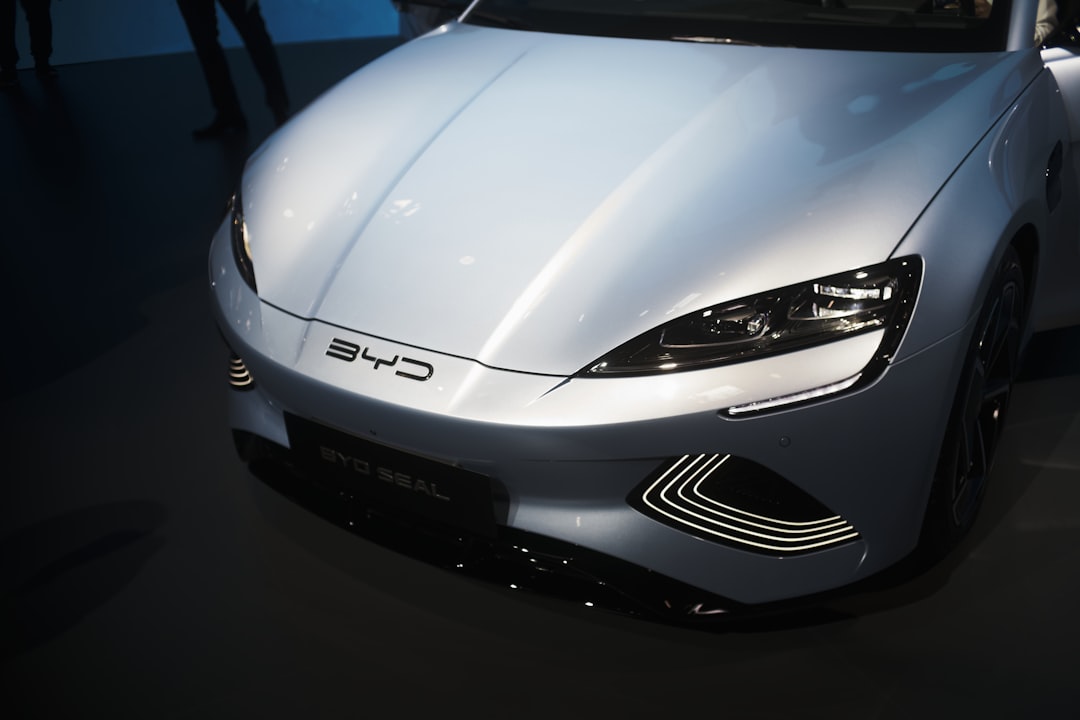
Here's where it gets technically juicy. BYD's Blade battery isn't just different—it's revolutionary. While Tesla chases higher energy density with complex cooling systems, BYD went the opposite direction: safer, cheaper, and ironically better at fast charging.
Recent teardown studies by German researchers found that BYD's batteries generate half the heat of Tesla's cells during charging. Less heat means faster charging, longer life, and fewer chances of your car becoming a very expensive bonfire.
Tesla actually started buying BYD batteries for their European Model Y production. Talk about awkward—imagine having to buy components from the company your CEO mocked on live TV.
The Global Expansion Game
BYD isn't content dominating China anymore. They're methodically conquering every market that will let them in, and even some that won't. Despite facing 17% EU tariffs on top of standard import duties, BYD cars remain competitive in Europe.
Their strategy is brilliant in its simplicity: make good cars, price them fairly, and let the market decide. No celebrity CEO antics, no Twitter meltdowns, no promises about flying cars or robot butlers—just solid engineering and business fundamentals.
Meanwhile, Tesla's global sales are projected to drop 5% in 2025, while BYD is planning to expand their overseas sales from 417,000 units to potentially over a million.
The Uncomfortable Truth
Musk's 2011 laughter now sounds like the automotive equivalent of those "This will never work" quotes about the internet. BYD has systematically outplayed Tesla in manufacturing, pricing, technology development, and market expansion.
They've done it without the drama, without the Twitter feuds, and without promising to colonize Mars. Just good old-fashioned engineering, smart business decisions, and a founder who knew when to listen to Warren Buffett instead of his own ego.
The most expensive mistake in automotive history? Not taking BYD seriously when they had the chance. Tesla could have acquired them, partnered with them, or at least not dismissed them on international television.
Instead, they created a competitor that's now bigger, cheaper, and arguably better at the one thing Tesla was supposed to dominate: making electric vehicles that people actually want to buy.
Wang Chuanfu once said, "I believe the time has come for Chinese brands." Turns out, he wasn't just believing—he was building. And while Musk was tweeting about Dogecoin, BYD was quietly becoming the future of electric vehicles.
Sometimes the best revenge isn't getting even. It's getting ahead. And right now, BYD isn't just ahead—they're disappearing over the horizon while Tesla is still trying to figure out where they went wrong.
Who's laughing now?
Comments